Smt. Manekba Gau-shala
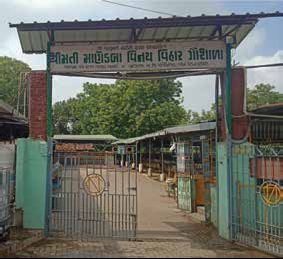
In India, the cow is treated as a mother. Today, when we are facing a conflict between development and human values, as well as problems like environmental degradation, poor health, malnutrition and global warming, it is time to realize that if we want to address these issues in a sustainable manner, we have to turn towards nature.
Hon. Indumatiben was committed to Gandhian thought, education of ‘hand, heart and head’, women’s upliftment and rural regeneration. She realized the importance of gau-sanskriti based culture and way of life, and hence, she established a well-equipped Gau-shala at Adalaj, to impart Gandhian value based agricultural and animal-husbandry activities.
Development of the Gau-shala
In the year 1960, the Gau-shala started with 6 Kankreji cows (one of the best breeds of cows in India). Today there are more than 180 Kankreji cows in the gau-shala and it ranks first in the state for housing pure Kankreji cows. There are separate and well-structured sheds each for, heifer calves, bulls, and other cows. There is a special farm for the production of fodder. A huge biogas plant of 45 cubic meters capacity is functional and it is a source of cooking gas for 25 families. There is a provision for producing Vermicompost fertilizer. The records of the assets and the identity tags for all the cattle is prepared and maintained systematically. In order to avail the information of the breed of every cow, each cow’s genealogy is maintained from the year 1993.
A daily register is maintained of each cow, consisting details of her milk production in the morning and evening, calving details, selling date, and date of death. In cooperation with the government’s ‘Gau-seva Aayog’, genealogically best breeds of bulls and heifers of the Kankrej breed are scientifically reared and sold at reasonable prices to the farmers, thus extending the gau-seva scheme’s benefits to the farmers.
Achievements at the National level
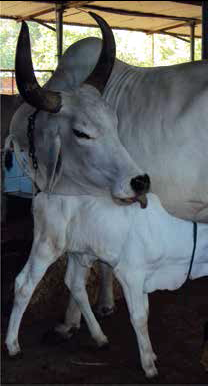
A cow named Ratan, from the Gau-shala won the first prize consecutively for three years in milk production competition at National level during the years 1965 to 1969. In the year 1967-68, another cow named Malati also stood first in the same competition.
Achievements at State level
- In the year 2002-03, the Gau-shala won the first prize out of the 400 gau-shalas and received the “Shrestha Sanstha Gau-shala Award” and the cash prize of Rs. 25000/- by the State Government.
- In the year 2003-04 the gau-shala won the first and third prize in the milk production competition and won the first and second prize in the year 2004-05.
- In the year 2008-09 the cows named Gira and Babita stood first in the competition of Kankrej breed cows, as a result of which both received a cash prize of Rs. 11000/- each.
Challenges faced by the Gau-shala
The Gau-shala which was established in the 1960s, has had its share of ‘testing times’. Consecutive famines, shortage of rain-water, insufficient irrigation facilities, etc. were the factors due to which the development of gau-shala was not satisfactory. After 2001, Managing Trustee, Shri Saubhagyachand K. Shah took special interest in the Gau-shala’s activities. Thereafter considerable development has taken place.
Brucellosis Epidemic
In spite of all the attempts to maintain hygienic conditions and regular vaccination our Gau-shala was also affected by the wide-spread epidemic of brucellosis among cows. As a result of this a number of cows got infected and tested positive during 2019. Immediate steps were taken to ensure that the infection does not spread. All the affected cows are now quarantined in a shed at a safe distance from the rest of the cows. Veterinary experts have been consulted repeatedly. They have visited the gau-shala several times and advised the agricultural staff to take the necessary precautions. Elaborate arrangements are worked out accordingly to counter the epidemic.
Facilities available at the Gau-shala
Activities in agriculture and Gau-shala are like full-time essential services that go on continuously, day and night. Work in the Gau-shala starts as early as 3:30 am. The daily routine tasks of a gau-shala consist of tethering the cows, providing fodder to them, milking the cows, distributing the milk, taking out cows for grazing, cleaning the sheds, cleaning the water containers, milking the cows in evening and again distributing the milk. At times some special seasonal issues need to be attended to during summer, winter, and rainy season. Medical treatment of animals and their health-check are also constantly required.
The herdsmen, employees and farm laborers perform their duties loyally, as for them it’s a service to ‘gau-mata’. All of these have contributed in the development of agriculture department and Gau-shala, as without any time-constraints they are patiently and loyally performing their duties. The management also takes care of them as if they are members of our family. Their residence, salary, providing EPF, adequate increments annually, biogas connections, uniform, free milk provision and special incentives during festivals like Diwali, are the generous facilities provided by the institution to its employees.
Future Vision for Gau-shala
To make this Gau-shala the “Best Model Gau-shala” of the State, the following steps are envisaged.
- Establish a pharmacy unit for manufacturing medicines based on cow ‘Panchgavya’.
- Increase the daily milk productio
- Adopt organic farming methods and discontinue the use of chemical ferti
- Further develop the existing pond for rain-water harvesting and storage.
- Enhance the cow-breeding activities by providing pure Kankrej breed cows and heifers to other gau-shalas and farmers.
- Establish a Demonstration and Training Centre for Kankrej breed cows.
- Establish sprinklers and drip-irrigation systems in the farm in order to save water and avail the maximum bulk of fodder for cows.
- Establish solar-units in the Gau-shala campus.
- Grow more trees in the campus, keeping in mind the environmental benefits and create open cow-sheds under the trees’ shade.